
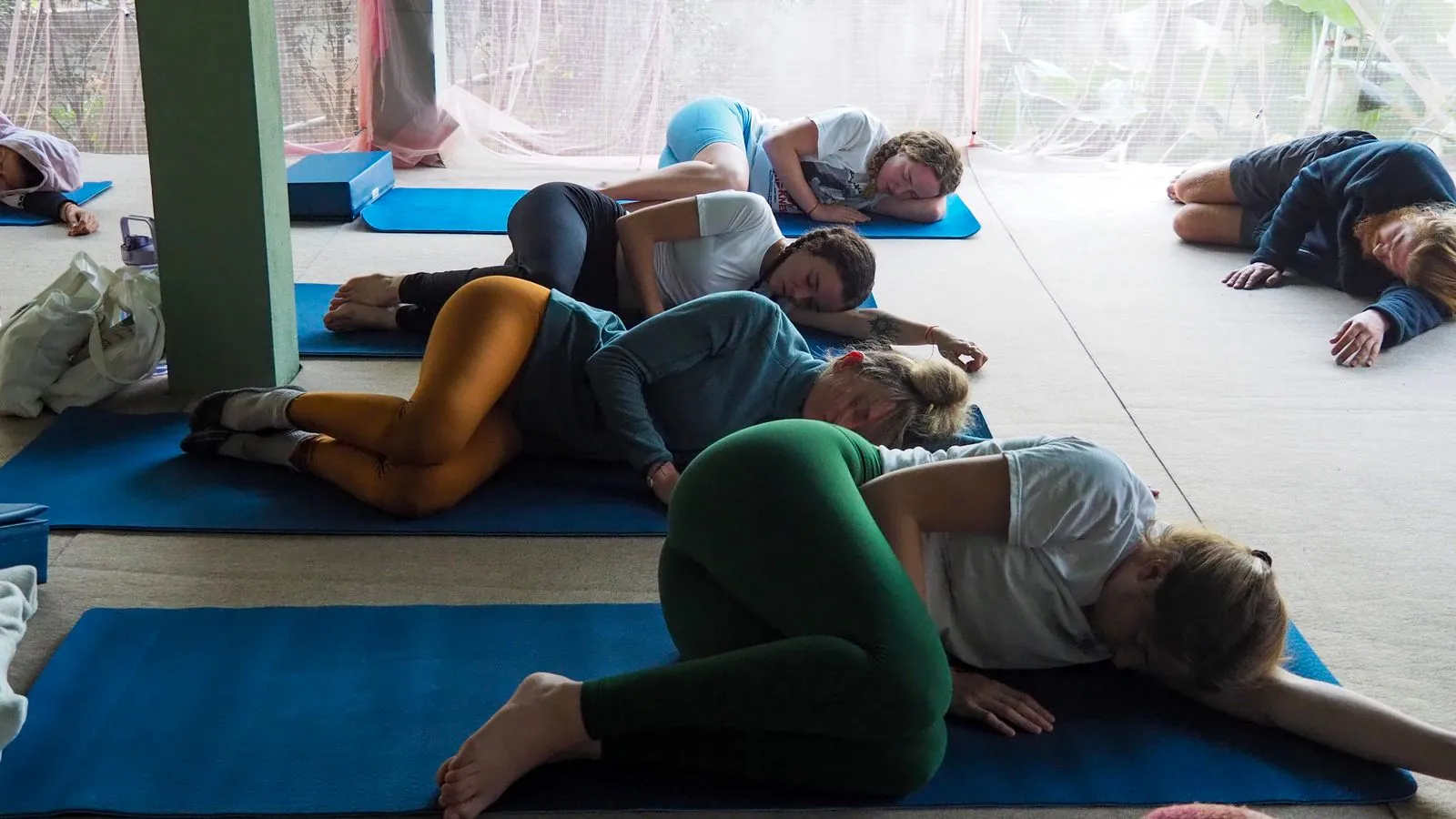
A children’s meditation session is usually less about sitting perfectly still and more about trying simple ways to notice thoughts, feelings, and the world around them. Activities may include breathing games, guided imagery, gentle movement, or listening exercises. Each child responds differently, and no one needs to get it “right.” Knowing what a session might involve can help parents set easy expectations and help children arrive feeling curious rather than pressured.
Activities Kids May Try
A facilitator might start with a brief check-in, such as asking children to name a feeling or choose a color that matches their mood. A breathing game could invite them to imagine slowly blowing on a pinwheel or smelling a flower. These playful prompts give children a concrete way to notice their breath without turning the activity into a test.
Sessions may also use stories, calming sounds, simple stretches, or guided imagery. Children might picture a safe, peaceful place or listen for sounds near and far. Activities can vary by age, group size, and the facilitator’s approach. Some children may participate quietly, while others learn best by moving, asking questions, or watching before joining in.
How Practice Can Help
Meditation gives children a chance to pause and direct their attention to one thing, such as a sound, a breath, or a movement. With practice, they can learn to notice when their attention wanders and gently bring it back. The goal is not to stop thoughts; it is to build familiarity with shifting attention in a supportive setting.
Calming exercises can help children recognize how their bodies feel when they are tense or settled. A slow breath or brief pause may become one tool they can try during a busy moment. Results differ from child to child, and meditation is not a substitute for medical or mental health care. Keep expectations modest: exploring the practice is a useful start.
Helping Your Child Prepare
Describe the session in simple, neutral terms: your child may breathe, listen, stretch, or imagine a story. Avoid promising that it will make them feel calm or suggesting that they must sit still. Let them know they can ask questions and that trying an activity is enough. This helps make the experience feel safe and manageable.
Before the session, consider practical needs: offer a bathroom break, choose comfortable clothes, and share any relevant sensory preferences or support needs with the facilitator. If your child feels unsure, you can ask what the room and activities will be like. At Little Stillness in Salt Lake City, parents can contact the center to ask about session details before attending.
After the Session
Give your child room to describe the experience in their own words. Try open questions such as, “What part stood out?” or “Was there anything you didn’t enjoy?” If they do not want to talk, that is fine too. Children may need time to process a new activity, and one session may not tell you whether they will enjoy meditation over time.
If your child likes a particular exercise, keep it simple at home. You could take a few quiet breaths together before a transition or listen for nearby sounds on a walk. Invite, rather than insist. A short, low-pressure practice is more likely to feel welcoming than turning meditation into another task your child must complete.
Children’s meditation sessions can combine breathing, movement, stories, and listening in ways that invite attention and calm without demanding perfect stillness. A clear, pressure-free introduction helps children know what to expect, while a curious conversation afterward can reveal what worked for them. If you’re considering a session, ask the center about its activities and how it supports each child.